Jul 14, 2026
The next platform shift isn't mobile-first. It's agent-first. Why businesses need to start thinking about AI agents as users of their systems.
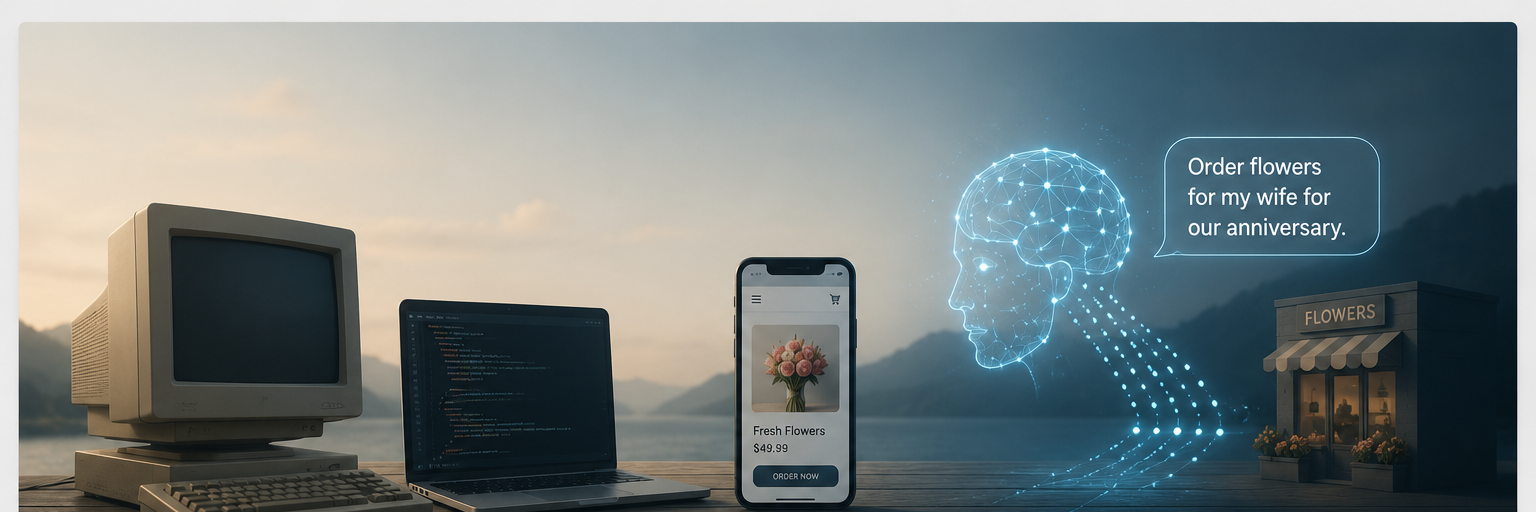
Not because people don't matter. And not because humans are going away.
I'm done building software exclusively for people because, increasingly, people aren't the ones using software. Their AI agents are.
For most of my career, building software meant building experiences for humans. We obsessed over navigation, page layouts, responsive design, button placement, and reducing the number of clicks needed to complete a task. Every major shift in technology changed how we approached that challenge.
I've been in the industry long enough to watch several of those shifts firsthand. First came the web, when companies rushed to establish an online presence with little more than a few static HTML pages. Then JavaScript transformed websites from digital brochures into rich, interactive applications. Later, smartphones forced businesses to rethink everything again as users increasingly expected every experience to work from the palm of their hand.
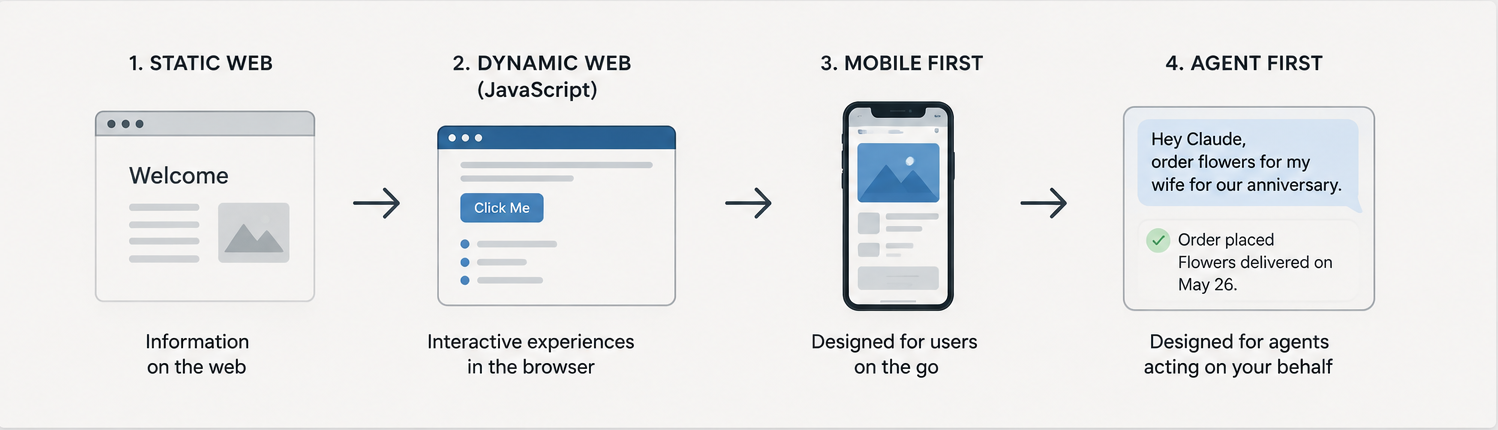
Entire industries adopted a "mobile-first" mindset because that's where their customers were.
I think we're approaching a similar transition. The next competitive advantage may not be mobile-first, but agent-ready.
If customers increasingly begin their journey with ChatGPT, Claude, Copilot, or whatever comes next, businesses will need to think about how those agents discover information, retrieve data, and complete actions on behalf of users. Just as mobile reshaped user experience design, AI agents are beginning to reshape how systems expose their capabilities.
Today, people are becoming comfortable interacting with AI in the same way they once learned to use search engines. Instead of searching, clicking through websites, comparing options, filling out forms, and completing transactions themselves, they're beginning with a simple request.
"Hey Claude, order flowers for my wife for our anniversary."
The customer still exists. The decision still belongs to them. But the software interacting with your business may no longer be operated directly by a human. It may be operated by an AI agent acting on their behalf.
That shift has significant implications for how businesses think about their systems. An AI doesn't care whether your website wins design awards. It doesn't care how intuitive your navigation menu is or how carefully optimized your conversion funnel may be. It cares whether it can understand your business, retrieve information, and complete actions on behalf of its user.
And if it can't, it may simply move on to a competitor that can.
My First "Agent User" Moment
That's what I've been experimenting with recently.
Over the past few months, I've been building MCP (Model Context Protocol) backends and connecting them to tools like ChatGPT and Claude. Not because I wanted another chatbot demo, but because I wanted to understand what happens when software is designed to be consumed by an agent.
One recent demo made the implications immediately obvious.
I spent roughly thirty minutes introducing a platform our team had been building. I walked through the interface, explained the workflow, and demonstrated how users could accomplish several common tasks. It was a normal product demo.
Then I switched over to Claude.
After connecting the platform through an MCP connector, I typed a single sentence and let the agent work:
"Let's do XYZ, but for six people at once."
A few moments later, it was done.
Not only did it work, it completed the task faster than I could have performed a single instance manually through the user interface.
The most interesting part wasn't that the AI succeeded. It was how it handled failure.
As it worked through the process, the agent discovered a business rule that prevented it from completing the request. Rather than simply failing, it inspected the available data, identified the problem, and came back with a clear explanation of what needed to happen next.
The conversation stopped being about buttons, screens, and workflows.
It became a conversation about outcomes.
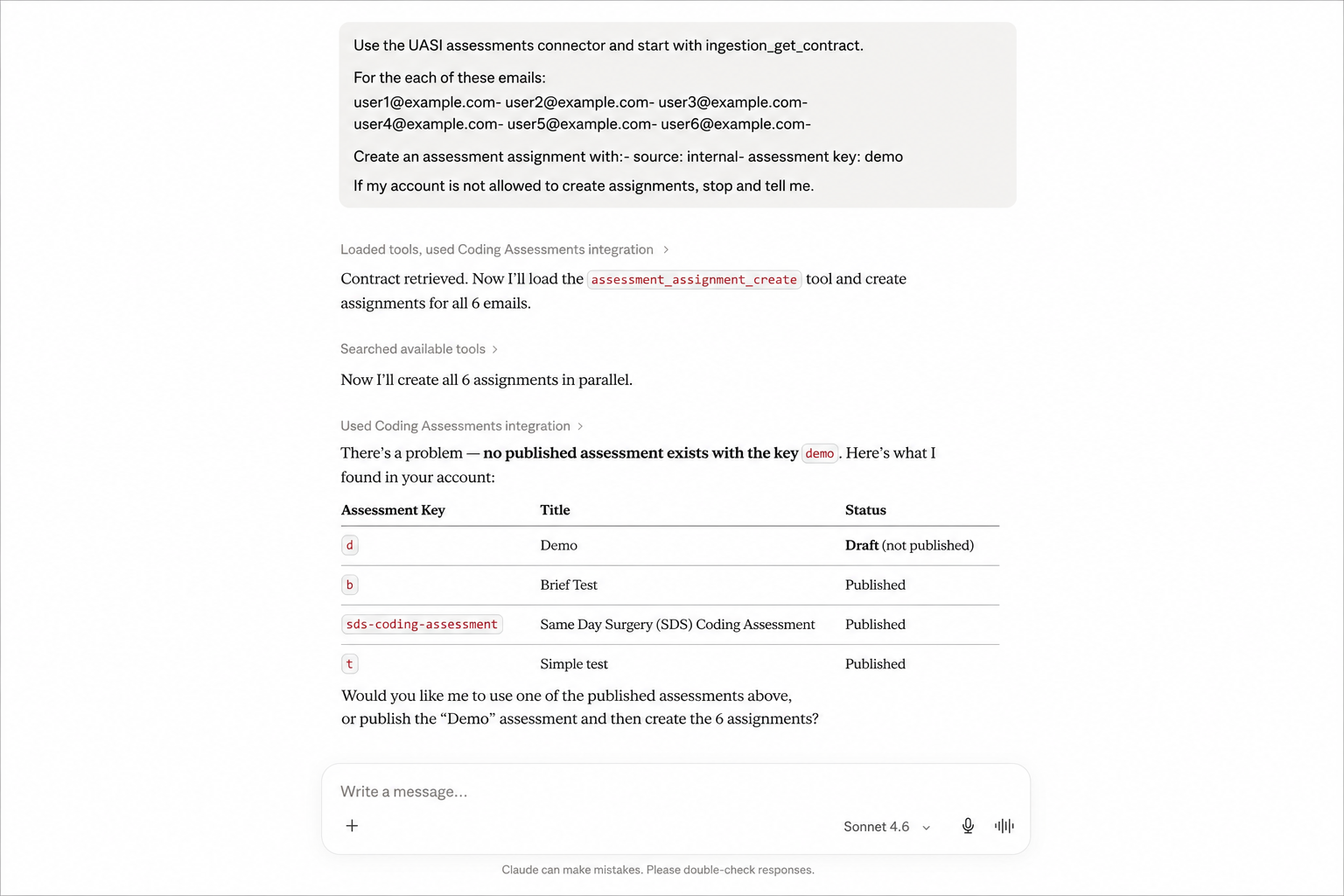
That was the moment the conversation changed.
The value wasn't that AI had learned how to click buttons. The value was that the system had become accessible in a completely different way. Instead of learning the interface, navigating screens, and following a process step by step, the user could simply describe the outcome they wanted.
The software still mattered. The business rules still mattered. The workflow still mattered.
But the interface had become a conversation.
What Business Leaders Saw
What surprised me most wasn't the technology itself.
It was how quickly the value clicked for business leaders.
Once they saw an AI securely accessing information, performing tasks, and interacting with existing systems, the conversation shifted. The question was no longer whether AI could help the business.
The question became:
How do we make our systems available to AI?
That's a very different conversation than the ones we were having even a year ago.
And unlike many AI discussions, this one isn't theoretical. Customers are already using ChatGPT, Claude, Gemini, Copilot, and countless other AI tools to help them make decisions. The only question is whether your systems are prepared to participate in those interactions.
Agent-First
I don't think websites are going away, and I don't think mobile apps are either. Human experiences will continue to matter.
But I do think we're entering a world where businesses need to consider a new kind of user.
For years, we optimized software for humans. Then we optimized it for mobile devices. The next evolution may be optimizing it for agents acting on behalf of humans.
Because increasingly, the first interaction with your business may not come from a customer clicking through your website.
It may come from an AI agent acting on their behalf.
And if your systems aren't ready for that future, someone else's will be.