Jul 27, 2026
Trying to guide an AI toward a picture in my head, and learning to work with the surprising choices it made instead.
Sometimes the best lessons about AI come from the silliest places.
A few weeks ago, my family went on a whale watching tour. The boat had a fun pirate theme, complete with a life-sized pirate standing outside for photos before boarding. The kids were invited to dress up for the cruise, but the adults, unfortunately, were expected to remain respectable.
I was not ready to accept that.
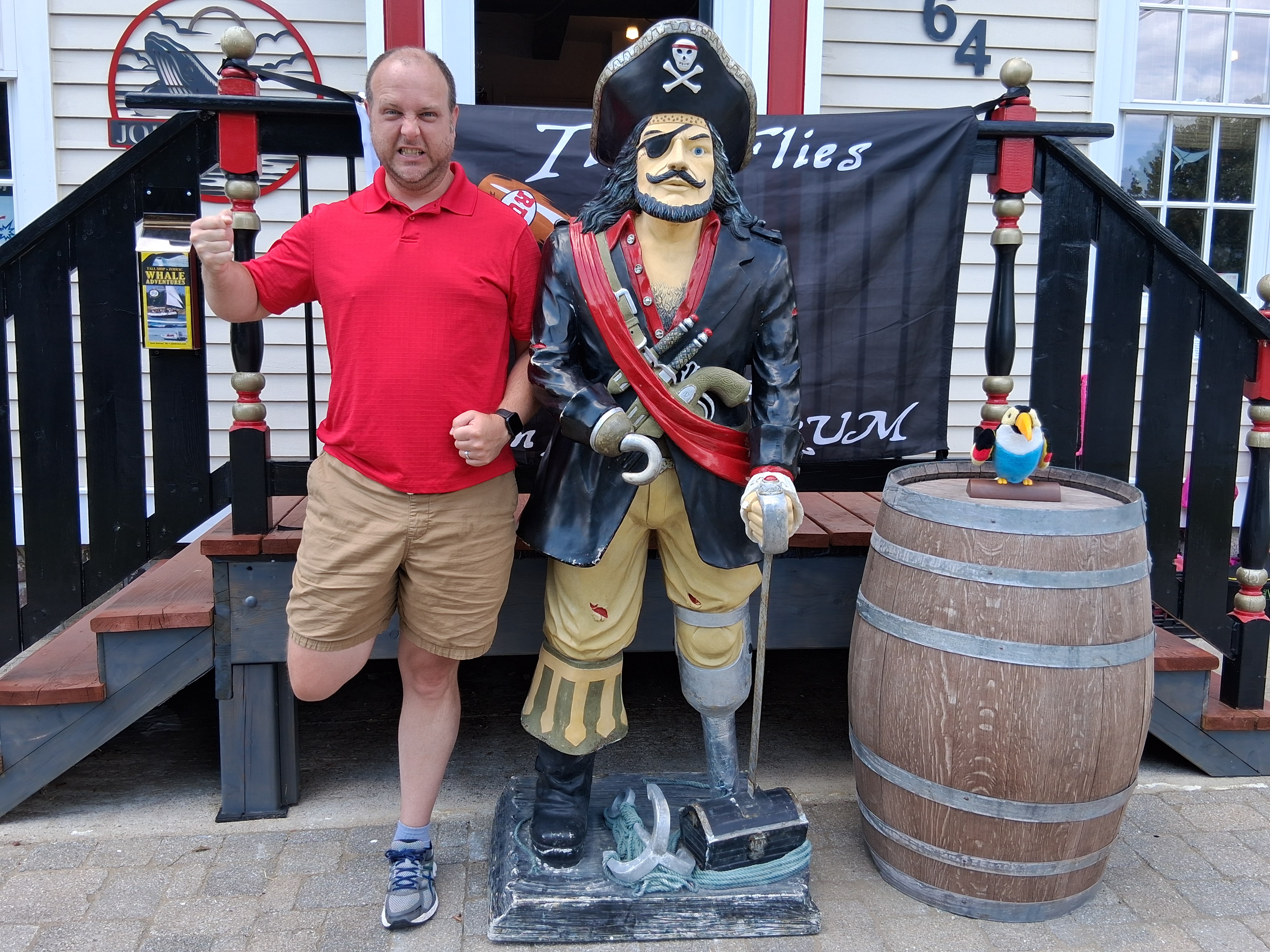
Before we boarded, I posed next to the pirate statue and snapped a picture with the intention of letting AI finish the job later. I figured I'd have it generate a pirate hat, a weathered coat, maybe a sword, and, for good measure, a wooden peg leg. To help it along, I balanced on one foot and tucked my other leg behind me, assuming the AI would recognize the missing leg and replace it with a peg leg.
The result was... not what I expected.
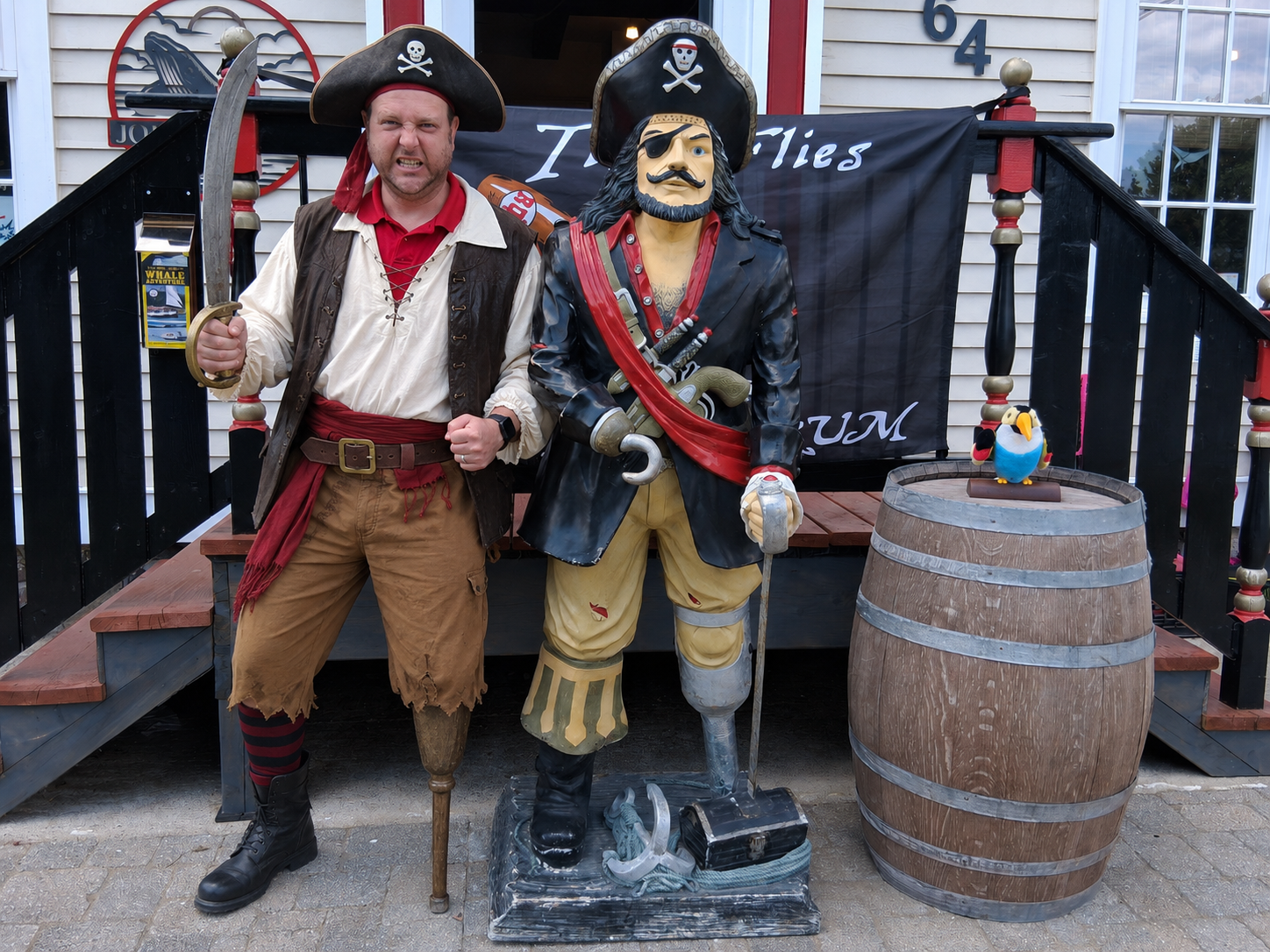
Rather than turning my hidden leg into a peg leg, the AI first restored the missing leg with a perfectly ordinary pirate boot. Then, apparently deciding that every pirate still needed exactly one peg leg, it replaced the leg I was actually standing on with a wooden one. The final image technically satisfied my request, but it also left me wondering how the AI had arrived at a conclusion that made so little sense to a human.
After thinking about it for a while, I realized the AI had not really made a mistake at all. It simply approached the problem differently than I did. I was asking it to reason about my intent, while it was trying to make statistical sense of the image in front of it. From its perspective, seeing a person with only one visible leg was the anomaly. People generally have two legs, so before it worried about making me look like a pirate, it quietly "fixed" the image by putting the missing leg back.
Only then did it honor my request by replacing one of those legs with a peg leg.
The wrong one.
That little experience reminded me of something that's easy to forget when we work with AI every day. We often imagine that it's reasoning through our requests the way another person would, filling in gaps with common sense and shared understanding. In reality, it's doing something much stranger. It's predicting what is most likely based on patterns it has learned from millions of examples. Most of the time, those predictions line up remarkably well with our intentions. Occasionally, though, they reveal just how different AI's understanding of the world really is.
This same pattern shows up everywhere. Ask an AI assistant to change one small section of your code, and it may "helpfully" refactor three others. Tell it not to rewrite a paragraph, and it rewrites it anyway. Request exactly ten examples, and somehow you end up with twelve. It's rarely being stubborn or ignoring you. More often than not, it's following the path that seems statistically most likely to produce a good answer, even if that path diverges from what you had in mind.
That's why I've come to think one of the most valuable skills in working with AI isn't writing perfect prompts. It's learning to expect surprises. The best AI users don't assume the first answer will be exactly what they envisioned. They either accept the unexpected turn or make time to follow a deliberate process of review, clarification, and refinement, because they understand they're collaborating with a system that predicts rather than truly understands.
In this case, the pirate picture turned into a reminder that the most useful part of working with AI is not always getting exactly what you first imagined. Sometimes it is accepting the unpredictable result, and sometimes it is being willing to invest in the iterative work that gets you closer to your intent.
Oddly enough, that turned out to be a much better lesson than the photo itself.